Posts

The Art and Craft of Hand Letterpress Printing

Image
  The Art and Craft of Hand Letterpress Printing Hand letterpress printing, a relief printing technique with roots tracing back to Johannes Gutenberg's movable type invention in the 15th century, is enjoying a significant revival today. Once the primary method for mass communication, it was largely supplanted by faster, more economical printing methods like offset lithography in the 20th century. Today, it is cherished as an artisanal craft, valued for its unique tactile quality, crisp text, and handmade appeal. A Brief History: From Industry to Art Form Letterpress printing revolutionized information dissemination, enabling the mass production of books and newspapers for centuries. The process involved inking a raised surface (originally individual metal or wood type) and pressing paper against it to transfer the ink. The shift to digital and offset printing Philippines in the late 20th century led to the decline of commercial letterpress shops, making their equipment affordable a...

Understanding Offset Printing Philippines: A Comprehensive Guide

Image
Offset printing is a highly efficient and widely used printing technique that has played a pivotal role in the evolution of print production. Renowned for its ability to deliver exceptional quality at scale, offset printing remains a preferred choice for businesses, publishers, and designers. This article explores the fundamentals of offset printing, its process, advantages, and applications. What is Offset Printing Philippines? Offset printing, also referred to as offset lithography, is a method where the inked image is transferred from a metal plate to a rubber blanket and then onto the printing surface, such as paper. This indirect transfer ensures that the printing surface does not come into direct contact with the metal plates, preserving the plates' durability and maintaining consistent print quality. The term "offset" highlights this indirect transfer of ink, which is a defining feature of the process. How Does Offset Printing Philippines Work? The offset printing ...

Offset Printing Philippines Process

Image
 Offset printing, otherwise called offset lithography, is a generally utilized business printing process for delivering great pieces of literature like books, papers, magazines, leaflets, and different materials. It is designated "offset" in light of the fact that the ink isn't straightforwardly moved onto the paper yet first exchanges onto a transitional surface prior to being applied to the paper. The offset printing process includes a few key stages: Prepress Arrangement: Plan and Format: The substance to be printed is ready on a PC utilizing visual communication programming. Plate Making: A printing plate is made for each variety the plan uses. Regularly, CMYK (Cyan, Fuchsia, Yellow, and Dark) plates are utilized for full-variety printing. Printing Plate Arrangement: In conventional offset printing, aluminum plates are utilized. Each plate relates to a different variety (CMYK or spot tone). The plates are synthetically treated to make picture regions that draw in ink ...

What is Direct to Garment Printing?

Image
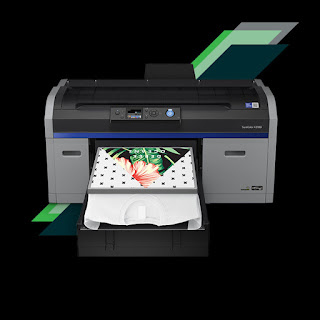
To Order from: Offset Printing Philippines Call mobile:  smart +63 999 470 9511 globe +63 995 867 2787 or email: offsetphilippines@gmail.com guide to offset printing  design  for offset printing Philippines:file: PDF/JPEG suggested: submit layered file  software: illustrator, indesign, photoshop,corel resolution: 300 dpi color mode: CMYK Black Text:    Cyan:0%  Magenta:0%   Yellow-0%   blacK-100%   DTG or Direct To Garment is the recent printing development that makes you print directly to a garment. Often, we see computer printers directly printing to paper. DTG is the printing process that publishes now on textiles using a particular inkjet printer. Inkjet started with paper printing, but this time it has a unique flat table that firmly holds the garment. The table with the garment passes through the ink jet spray, where printing the computer image on the garment is done. The process is similar to paper printing, and the only differenc...

Double Loop Binding

There are different types of binding for books and notebooks, and the most common you will see is the saddle stitched binding and perfect binding. The one on the video is also a binding usually used for notebooks and journals, and this is the double loop binding. The nice thing about double-loop binding is that it is easy to assemble for production. The perfect binding and the saddle-stitched binding often require folding a bulky signature of printed sheets before collating them before they are cut to the final size to become individual pages of the book or the printed magazine. The process passes through the folding machine before sending to the perfect binding machine or the stitching machine for the saddle-stitched case. The double loop pages, on the other hand, can already be gathered together to form the book's final pages and fed into the punching machine before inserting the wires to bind the pages together.   

Photoshop or Illustrator, Which is Which?

Image
  Offset printing Philippines use various software. There is Photoshop, Illustrator, and InDesign, all from Adobe, and one more, Corel Draw. Can we produce an offset print-ready layout with just one of these? The answer is yes, and it is possible to create a design with any software mentioned that is acceptable to an offset printing output. We say acceptable because there is a particular design that requires a specific result that only a certain software is capable of producing. The product is where you will understand some of its fundamental differences. These two programs have much in common, but their differences are more prominent than their similarities. Photoshop is based on pixels, while Illustrator works using vectors. Photoshop is raster-based and uses pixels to create images. Illustrator works off vectors, points used to create perfectly smooth lines. Let us discuss Adobe Photoshop and Adobe illustrator mainly. These can make a poster-ready layout for your offset printi...

The Beginning of Mass Printing 2020

Image
 Johannes Gutenberg was a goldsmith during Roman times. He was a scholarly man who had obtained profound information on making cleaned metals. His life is a puzzle for the antiquarians; however, making portable printing machines came to him 'like a beam of light. The primary printing activity was completed in 1450 by a machine that utilized versatile wooden parts. After the fruitful printing of the equivalent, he could persuade a few financial specialists. Gutenberg's workshop was at Hof Humbrecht. This property had a place with one of his removed family members. The Modern Day Offset Printing The state-of-the-art balance printing is the refreshed rendition of Guttenberg's unique machine. Metallic parts supplanted the wooden pieces of the print machine during metal production. Advanced offset printing includes prepress creation, one of the essential and fundamental advances—a significant consideration to guarantee that the records are handled effectively for making suitable...